
Converting local searches into loyal customers through strategic map placement.

The Battle for the Florida Local Pack
In the hyper-competitive markets of Florida, appearing on the first page of Google is no longer enough. To truly capture the attention of high-intent customers, your business needs to occupy the “Local Pack”: that coveted trio of listings that appears at the top of search results alongside a map. Whether you are a boutique law firm in Sarasota or a bustling restaurant near the theme parks in Orlando, the Local Pack is where the majority of clicks and calls happen. It represents the ultimate intersection of trust, location, and convenience for the modern consumer.
At WEBDIZINI SEO, we see businesses struggle because they treat their Google Business Profile like a static yellow-page listing. In reality, the Local Pack is a dynamic ecosystem influenced by real-time data, user behavior, and proximity. To dominate this space, you must understand that the algorithm treats a searcher in the heart of downtown differently than one in the suburbs. Mastering this balance is the key to sustainable growth in the Florida market.
Why the Local Pack Differs from Standard Maps
It is a common misconception that the Local Pack and the Google Maps app function identically. While they share data, the intent behind the user’s search changes the weight of various ranking factors. The Local Pack, which appears in standard search results, is heavily influenced by “Prominence”: how well-known and authoritative your business is across the web. This includes your reviews, your website’s SEO, and your local citations.
Conversely, the dedicated Google Maps app leans more heavily into “Proximity.” When a user is already inside the Maps app, they are usually looking for the closest possible solution to their immediate problem. If you want to capture leads in both environments, you need a strategy that balances brand authority with extreme geographic relevance. This is particularly vital for companies scaling their local SEO in Miami or competing for visibility in the high-density districts of Tampa.
Navigating the Discovery Phase in Major Cities
When a potential customer searches for “best plumber near me” or “digital marketing services,” they are often in the discovery phase. They aren’t just looking for the closest option; they are looking for the best option. In a city like Sarasota, where reputation carries significant weight, appearing in the top three results with a high star rating is the difference between a ringing phone and a quiet office. Google uses this space to curate the most reliable businesses based on social proof and relevance.
For businesses looking to establish themselves, local SEO Sarasota requires a focus on building a cohesive narrative that proves you are a staple of the community. This involves more than just keyword stuffing; it requires consistent engagement with your profile and a website that reinforces your physical location through high-quality, localized content.
The Action Phase Shift in Orlando Tourism Hubs
In contrast to the slower discovery phase, markets like Orlando often deal with the “action phase.” This is driven by high-velocity traffic from tourists and residents alike who need solutions now. If someone is searching for a service near Universal Studios or Lake Nona, they are likely ready to visit or call within minutes. In these scenarios, Google prioritizes convenience, such as updated holiday hours, clear “Get Directions” buttons, and mobile-optimized interfaces.
Winning in Orlando means your Google Business Profile must be 100% accurate at all times. If your hours are wrong or your map pin is slightly off, the algorithm will quickly demote you in favor of a competitor who provides a more seamless user experience. The speed of the Orlando market demands a proactive approach to profile maintenance that many businesses overlook.

Cracking the Proximity Code
Proximity remains the single most influential ranking factor in local search, yet it is the one you have the least direct control over. You cannot move your building closer to every customer, but you can influence how Google perceives your “service area.” The challenge for Florida businesses is that our major metros are sprawling. A business in Tampa might want to reach customers in Clearwater, or a Miami-based firm might want to attract clients from Fort Lauderdale.
To crack this code, you must ensure that your digital footprint is anchored firmly in your physical location. Google validates your proximity by cross-referencing your address across hundreds of directories. If there is even a slight discrepancy: like “Suite 100” vs “Ste. 100”: it creates friction in the algorithm’s “trust” score, which can shrink your ranking radius.
Geofencing Your Business for Maximum Visibility
While “geofencing” is often used in the context of paid ads, a similar philosophy applies to organic Map rankings. You want to create a “relevance bubble” around your physical location. This is achieved by generating content that mentions local landmarks, neighborhoods, and community events. By doing this, you signal to Google that your business isn’t just at an address, but deeply integrated into the specific geography of that area.
When we work on local SEO Sarasota, we focus on creating localized service pages that speak specifically to neighborhoods like St. Armands Circle or Lakewood Ranch. This helps broaden the radius in which your business appears as a top result, essentially convincing the algorithm that your expertise makes you the best choice even if a competitor is technically a few blocks closer to the searcher.
How Distance Influences Sarasota Search Results
Sarasota presents a unique challenge due to its mix of seasonal residents and year-round locals. Distance is calculated not just from the center of the city, but from the user’s precise GPS coordinates. If a user is searching from a boat off Lido Key, the results will look different than if they are searching from a desk in Fruitville. To maintain dominance, your profile must be optimized for these micro-moments of search.
The key here is “behavioral signals.” When people consistently choose your business from the map even when you aren’t the closest option, Google takes notice. They interpret this as your business having higher “Prominence,” which can eventually override the proximity penalty. This is why building a brand that people specifically search for by name is a cornerstone of our Sarasota SEO services.
Managing Multiple Service Areas Across Tampa and Miami
For businesses operating in both Tampa and Miami, the strategy must shift to accommodate two very different urban layouts. Tampa’s search environment is often more centered around established commercial corridors, while Miami is a patchwork of high-density “mini-cities.” Managing profiles for both requires a hyper-local approach for each branch.
Never use the same description or photos for multiple locations. Each office should have its own set of localized images: think storefront shots with local street signs visible: and reviews from customers in that specific zip code. This granularity is what allows a multi-city business to feel like a “local” choice in every market they serve.
Optimizing the Google Business Profile
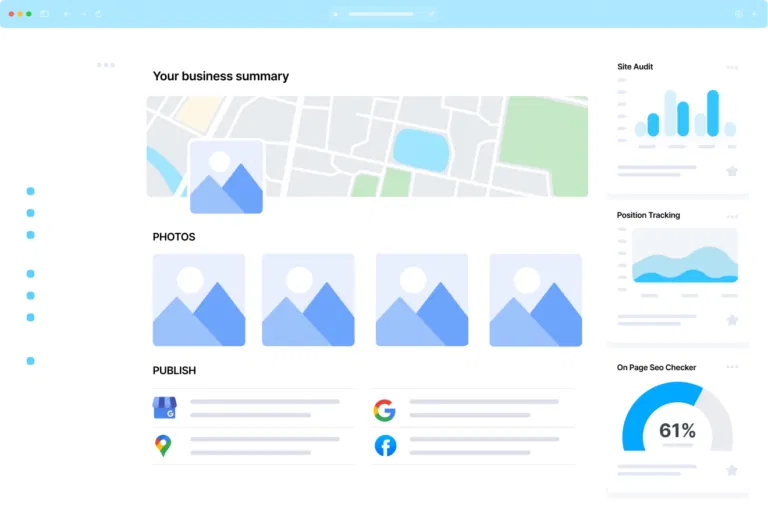
Your Google Business Profile (GBP) is the engine that drives your Map rankings. Simply “claiming” your profile is the bare minimum; optimization is an ongoing process of feeding the algorithm fresh data. Google rewards active profiles. This means posting updates, answering questions, and uploading new photos regularly. It’s about showing Google: and your customers: that your business is thriving and attentive.
The fields you fill out in your profile act as “meta-tags” for the real world. Every attribute you select, from “Veteran-led” to “Wheelchair accessible,” helps Google match you with specific user queries. In cities like Orlando, where diversity and accessibility are high priorities for consumers, these small details can significantly impact your click-through rate.
Category Selection Strategies
Choosing your primary category is perhaps the most critical decision you will make on your profile. This single choice tells Google what your “core” business is. If you get this wrong, you might rank for keywords that don’t convert or, worse, fail to rank for your main service altogether. You should always choose the most specific category available that describes your primary business model.
If you are an attorney, don’t just pick “Lawyer.” If your focus is family law, select “Family Law Attorney.” This specificity allows you to compete in a smaller, more relevant pool of competitors. In the crowded markets of Miami and Tampa, being a “big fish” in a specific niche category is often more profitable than being invisible in a broad one.
Choosing Primary Categories for Florida Real Estate and Law
In the Florida market, real estate and law are two of the most competitive verticals. For a real estate agency in Sarasota, the primary category should reflect their specific focus, whether it’s “Real Estate Agency” or “Property Management Company.” Mixing these up can confuse the algorithm and lead to poor lead quality.
We recommend looking at the “top 3” competitors in your area to see which categories they are using. Often, there is a “goldilocks” category that captures the most traffic. By aligning your primary category with the market leaders while utilizing secondary categories to differentiate your unique services, you create a balanced profile that is both relevant and competitive.
Leveraging Secondary Categories for Orlando Attractions
Orlando businesses often have multiple revenue streams. A hotel might have a world-class spa and a high-end restaurant. In this case, leveraging secondary categories is vital. You can list up to ten categories on your GBP. While the primary category carries the most weight, the secondary ones allow you to show up in “discovery” searches for those specific services.
If you are managing an attraction or a service-based business in Orlando, ensure your secondary categories are not redundant. They should represent distinct services you offer. This helps you cast a wider net in the Local Pack without diluting the authority of your primary business focus.

Building High-Impact Reputation Signals
Reputation is the “currency” of the Local Pack. Google’s primary goal is to provide the user with a great experience, and the safest way for them to do that is to recommend businesses that others have already vetted. This is why the quantity, quality, and velocity of your reviews are so important. It isn’t just about having a 5-star rating; it’s about having a current 5-star rating.
A business with 100 reviews from three years ago will likely lose its spot to a competitor with 40 reviews, 10 of which were left in the last month. Recency signals to Google that your business is still active and providing high-quality service. This is particularly true in fast-moving markets like Orlando and Miami, where consumer trends shift rapidly.
Generating Authentic Florida Customer Feedback
Getting reviews shouldn’t be left to chance. You need a system. Whether it’s an automated email after a service or a QR code at your checkout counter in Sarasota, making it easy for customers to leave feedback is essential. Authentic reviews often include “keywords” naturally: customers might mention the “best SEO services in Florida” or “great help with my Sarasota property.” Google reads these reviews and uses them to better understand your business.
Avoid the temptation to “buy” reviews or use “review gating” (only asking happy customers for feedback). Google’s AI is incredibly sophisticated at detecting unnatural review patterns. A sudden spike of 50 reviews in one day for a small Sarasota shop will likely trigger a manual review or a profile suspension. Slow, steady, and honest growth is the only way to win in the long run.
Encouraging Local Reviews in the Sarasota Community
In Sarasota, the community is tight-knit. Word-of-mouth still rules, but that word-of-mouth has moved online. Encouraging customers to mention their specific neighborhood or a local landmark in their review can actually help your local SEO. It provides further geographic proof to Google that you are serving the local area effectively.
When we consult on local SEO Sarasota, we suggest businesses respond to every single review: both positive and negative. Responding to a review is a signal to Google that you are an engaged business owner. It also gives you a chance to subtly use local keywords in your response, such as, “We loved helping you with your project here in downtown Sarasota!”
Handling Volume and Recency in High-Traffic Miami Markets
Miami is a high-volume market. If you aren’t getting new reviews weekly, you are falling behind. Because of the sheer number of people living in and visiting Miami, the “bar” for review quantity is much higher than in smaller cities. You might need hundreds of reviews just to be considered for the top 3 in a popular category.
To manage this, businesses must integrate review requests into their daily operations. This is where automation tools become invaluable. By syncing your customer database with a review platform, you can ensure that every single client is given the opportunity to share their experience, keeping your “recency” signal strong and your ranking stable.
Advanced Technical Signals for Map Rankings
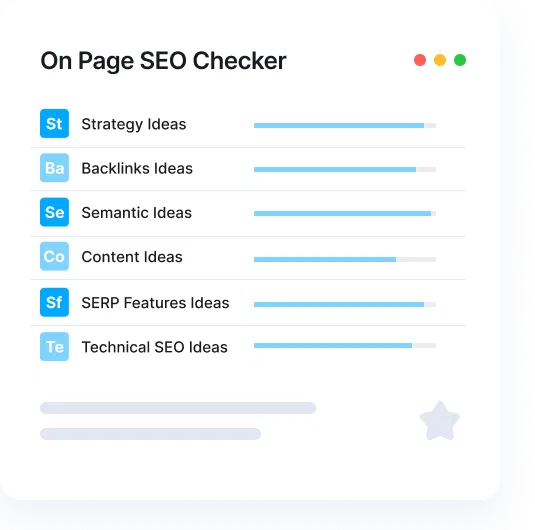
While the Google Business Profile is the front-facing part of your Map presence, your website’s technical SEO is the backbone. Google looks at your website to verify the information on your profile. If your website is slow, not mobile-friendly, or lacks local structured data (Schema markup), your Map rankings will suffer. The two are inextricably linked.
In the 2026 search landscape, technical “cleanliness” is a prerequisite. With the rise of AI-driven search, Google is looking for structured data that it can easily parse and display to users. This means your address, phone number, and business hours should be coded in a way that search engines can read instantly, without having to “guess” based on the text on the page.
The Role of On-Page SEO in Map Placement
On-page SEO tells Google what your website is about, which in turn influences what your Map listing ranks for. If your website is optimized for “commercial real estate,” your Map listing is more likely to show up for that specific term. This is why we focus on creating a “waterfall” of relevance from your homepage down to your city-specific landing pages.
For businesses targeting multiple Florida hubs, having dedicated pages for local SEO in Orlando or Tampa is essential. These pages shouldn’t just be duplicates of each other with the city name swapped out. They should feature unique content, local testimonials, and specific service details that are relevant to that city. This builds the “Prominence” signal that the Local Pack requires.
Linking Local Pages to Your Google Profile
One of the most effective “pro-tips” for Map mastery is to link your GBP directly to a localized landing page rather than just your homepage. If you have a Sarasota location, link that specific profile to your Sarasota-specific service page. This creates a tight loop of relevance for the algorithm.
When a user clicks from the Map to your website and finds exactly what they were looking for on a localized page, it reduces the “bounce rate.” Google tracks these interactions. High engagement on your linked landing page tells Google that your Map listing was a “good” result for that user, which reinforces your ranking for future searches.
Mobile Responsiveness for On-the-Go Orlando Travelers
In Orlando, a massive percentage of Map searches happen on mobile devices. If your website takes more than three seconds to load on a 4G connection, you are losing customers. Mobile responsiveness isn’t just about the layout; it’s about the “thumb-friendliness” of your site. Are the buttons big enough? Is the phone number clickable?
Google’s “Mobile-First” indexing means that the mobile version of your site is the one used for ranking. If your mobile site is a stripped-down, poorly functioning version of your desktop site, your Map rankings will tank. We prioritize lightning-fast load times and intuitive mobile navigation to ensure that every “Get Directions” click results in a conversion.
Future-Proofing Your Local Presence
The world of search is changing. With the integration of AI into Google Search (Search Generative Experience), the way users interact with local businesses is evolving. Users are now asking complex questions like, “Which Sarasota coffee shop has the best outdoor seating and fast Wi-Fi?” To answer these, Google pulls data from your reviews, your website content, and your GBP attributes.
Future-proofing means moving beyond simple keywords and focusing on “entity” building. You want Google to understand your business as a trusted entity in the Florida landscape. This involves consistent branding, active social signals, and a website that provides deep, authoritative answers to local questions.
Adapting to AI-Driven Local Search
AI search engines don’t just look for keywords; they look for context. They are designed to understand user intent. If an AI search tool is recommending a business in Tampa, it’s doing so because it has “read” enough positive data points to be confident in that recommendation. This makes your overall digital reputation more important than ever.
By maintaining a robust Google Business Profile and a technically sound website, you are feeding the AI the data it needs to recommend you. We are already seeing a shift where businesses with lower “traditional” SEO scores are outranking competitors because they have better “contextual” data, like detailed reviews and high-quality photos that the AI can analyze.
How Search Generative Experience Affects Tampa Businesses
Tampa is a tech-forward city, and its residents are early adopters of AI tools. For Tampa businesses, this means your “digital twin”: the way AI perceives your business: must be flawless. If there is conflicting information about your services online, the AI will likely skip over you in favor of a business with a clearer, more consistent data profile.
We help our clients stay ahead by conducting “entity audits.” We look at how your business is mentioned across the web to ensure that the narrative is consistent. This is the new frontier of local SEO, and it is what will separate the leaders from the laggards in the coming years.
Staying Competitive in the Evolving Miami Digital Landscape
Miami is a global city, and the competition is world-class. Staying competitive here requires a relentless focus on data and performance. You cannot afford to set and forget your SEO. You must monitor your rankings daily, respond to trends, and constantly look for new ways to provide value to your local audience.
As we look toward the future of digital marketing in Florida, one thing remains certain: the businesses that prioritize the user experience and maintain a clean, authoritative digital footprint will always come out on top. Whether you are in Sarasota, Orlando, Tampa, or Miami, the path to Map mastery is built on consistency, relevance, and a deep understanding of your local community.